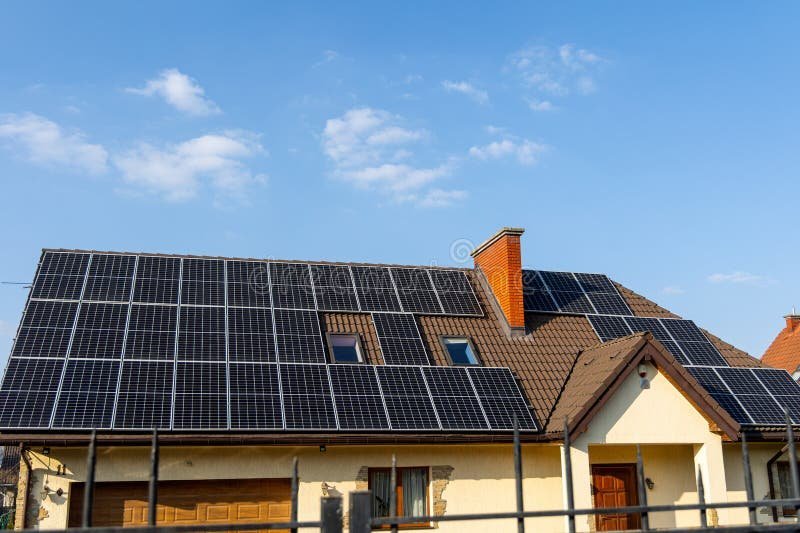

In most apartment complexes and housing societies, the common electricity bill — for lifts, water pumps, corridor and street lighting, gates and CCTV — is one of the largest monthly expenses. Rooftop solar on the society terrace can reduce this bill dramatically and lower maintenance charges for every member.
Is there a subsidy for societies?
Yes. Under the central rooftop solar programme, Group Housing Societies (GHS) and Resident Welfare Associations (RWA) can receive financial assistance for solar installed to power common facilities. As per guidelines at the time of writing, the assistance is around ₹18,000 per kW, for capacity up to a specified limit per society (which can include EV charging in common areas).
Rules and limits can change — confirm the current amount on the official portal before finalising your plan.
What can a society solar plant power?
- Lifts — usually the biggest common load
- Water pumps — borewell and overhead tank pumps
- Common lighting — corridors, staircases, compound and street lights
- Security systems — gates, CCTV, intercom
- Clubhouse, gym and EV chargers
How to size the system
Collect the last 12 months of the common-area electricity bills and calculate the average monthly units. As a rough guide, each kW produces around 120–130 units a month in Gujarat. If the society uses 2,000 units a month, a system of about 15–16 kW could cover most of it — provided enough shadow-free terrace space is available.
Typical steps for a society
- Pass a resolution in the managing committee or general body.
- Get a technical survey of the terrace — area, shadows, structure.
- Compare proposals from registered vendors on quality, not just price.
- Apply on the portal under the GHS/RWA category.
- Install, inspect and commission with a net meter on the common connection.
- Claim subsidy into the society's bank account.
Using the terrace smartly
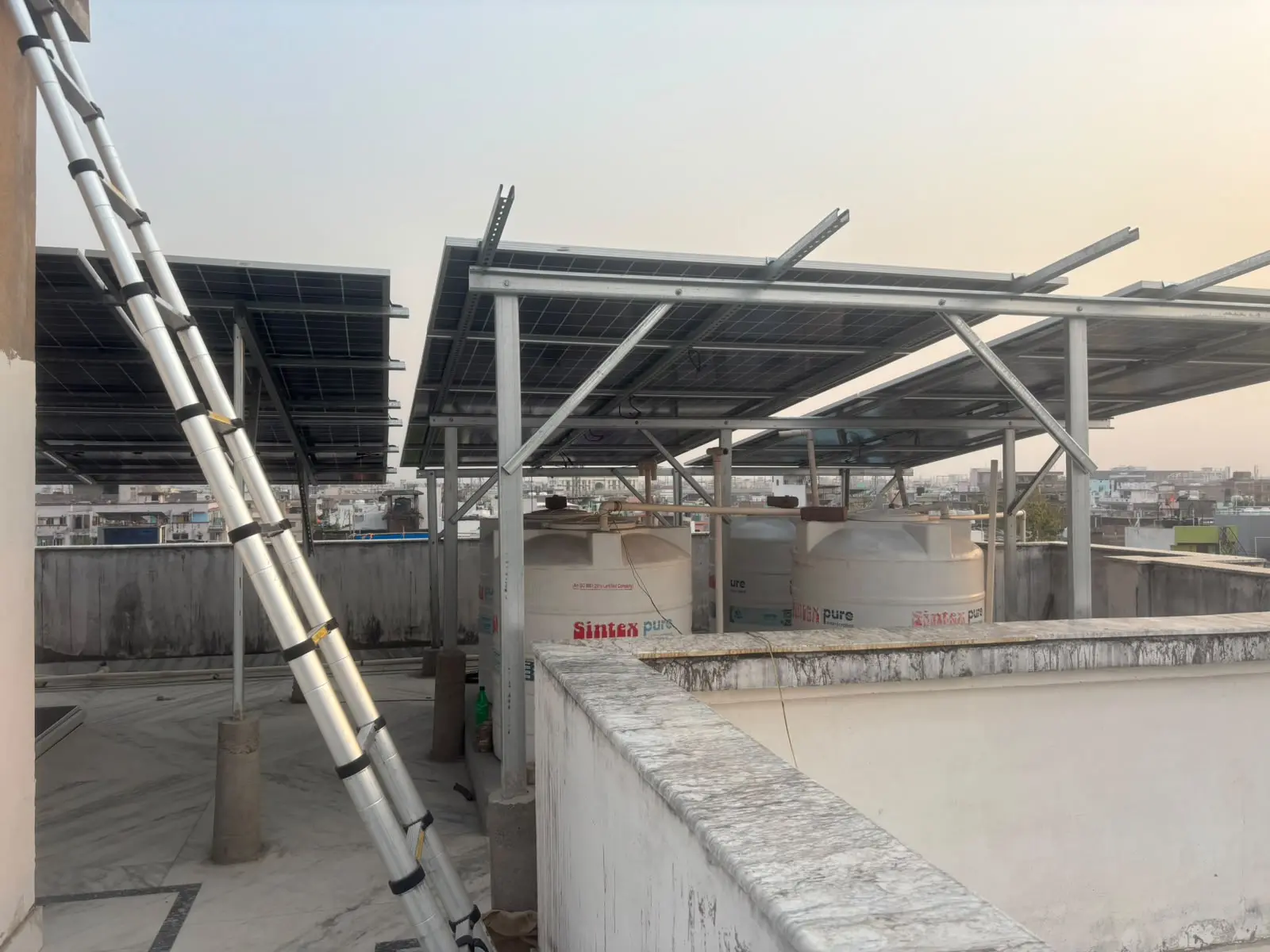
Many societies worry that panels will block the terrace. An elevated mounting structure keeps panels 7–10 feet above the slab, so the terrace remains usable for drying clothes, water tanks and maintenance access. Read more about elevated solar structures.
Can individual flat owners get solar?
Flat owners can install solar for their own connection only if they have a dedicated, shadow-free roof portion and permission from the society. In most cases, a common solar plant is the more practical and fair option. See our guide on rooftop solar for flats and societies.
Frequently asked questions
Can the society use solar power for individual flats?
A society plant connected to the common meter powers common facilities only. Individual flats need their own connection-linked systems. The saving reaches members through lower common maintenance charges.
Who maintains the society solar plant?
The society is responsible, usually through an AMC with the installer that covers cleaning, electrical checks and breakdown support. Assign one committee member to track generation monthly.
How much terrace space does a society plant need?
Roughly 80–100 sq. ft. of shadow-free area per kW. A 20 kW plant needs around 1,600–2,000 sq. ft. Elevated structures can help when the terrace has tanks and obstructions.
Let's plan your society's solar project
Naksh Power Solution designs society solar plants with proper earthing, lightning protection and integration with the existing LT panel. We are happy to present to your committee. Request a site visit.