Rooftop solar panels sit at the highest point of your building, surrounded by metal frames and cables. During the monsoon thunderstorms, that makes them vulnerable to lightning. A lightning arrester (LA) protects your system and your building.
How a lightning arrester works
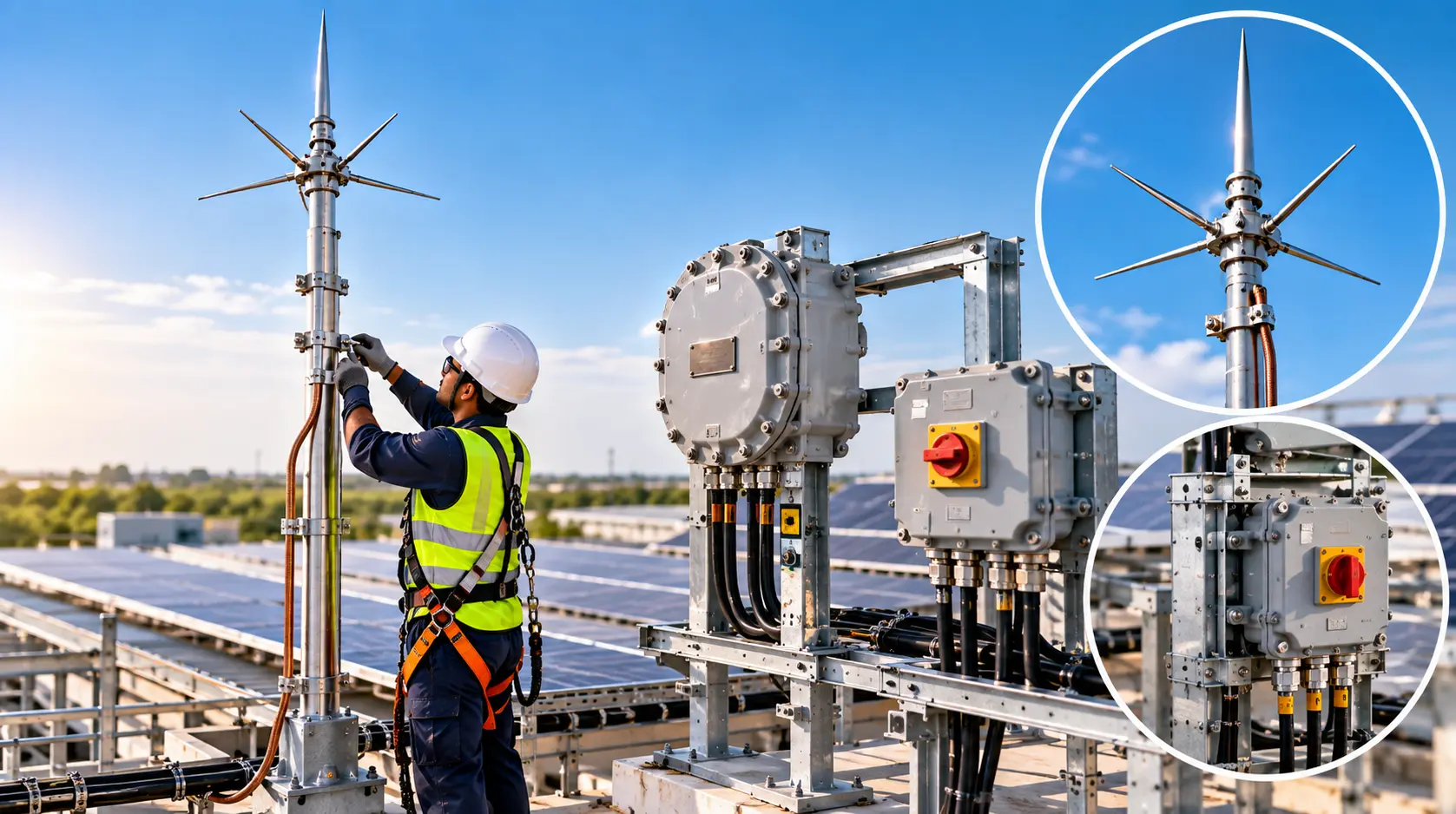
A lightning arrester provides a preferred path for a lightning strike. It intercepts the strike above the panels and carries the current safely through a down conductor into a dedicated earth pit.
Types of lightning arresters
Conventional (Franklin rod)
A pointed copper or GI rod. Its protection zone depends on its height. Multiple rods may be needed for large roofs.
ESE (Early Streamer Emission)
Designed to provide a larger protection radius from a single mast. Commonly used for larger rooftops and industrial plants.
The type and number depend on roof size, building height and design calculations.
Correct installation
- Mounted higher than the panels so the array lies within the protection zone
- Dedicated down conductor with minimal bends, routed away from DC cables
- Connected to a dedicated earth pit with low earth resistance
- Firmly anchored mast that withstands wind
Lightning arrester vs SPD
They do different jobs:
- Lightning arrester: handles a direct strike on the building.
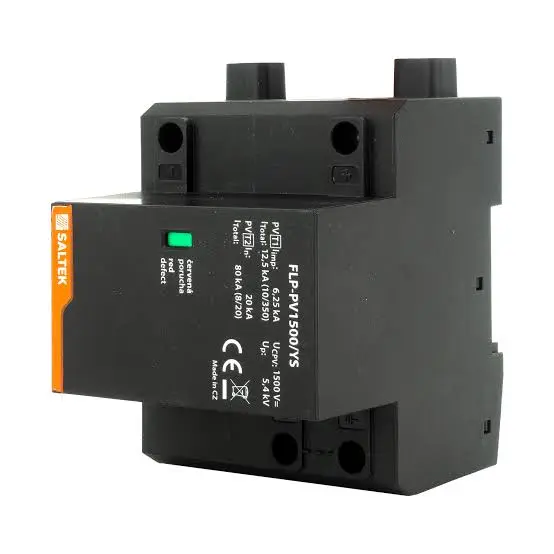
- SPD (Surge Protection Device): protects equipment from voltage surges induced in cables by nearby strikes.
A complete system needs both — SPDs in the DCDB and ACDB, and an LA on the roof. Read ACDB and DCDB explained.
Maintenance
- Check connections and the down conductor annually
- Measure earth pit resistance before the monsoon
- Replace corroded parts
Frequently asked questions
Is a lightning arrester mandatory for home solar?
It is strongly recommended and often required by scheme or DISCOM specifications. It protects your system and building.
Can the arrester share an earth pit with the inverter?
The lightning arrester should normally have its own dedicated earth pit, connected as per design.
How high should it be?
High enough that the entire panel array falls within its protection zone, as per design calculations.
Protect your investment
Naksh Power Solution installs lightning arresters and SPDs as standard on every solar project — never as an optional extra. Contact us.